August 6, 2025
How AI and Social Media are Making Us Dumber
The episode is strongest when it warns that passive consumption of social media and AI can weaken habits of assessment. It weakens where that real concern becomes sweeping cultural diagnosis, in-group apologetic credit-claiming, anecdotal chatbot generalization, overread neuroscience, and an unsupported dualist veto on machine consciousness.
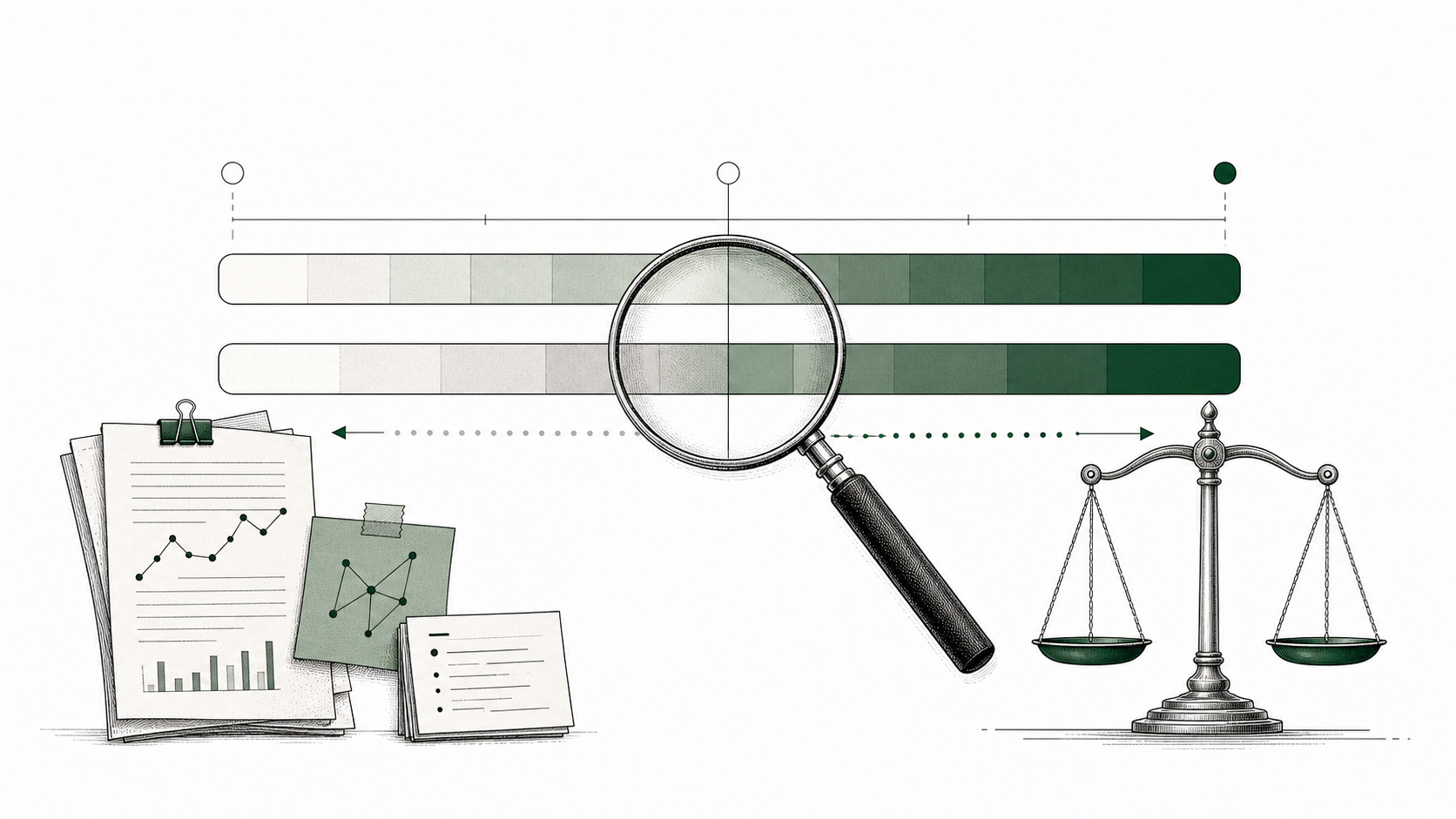
Critique Framework
How this page evaluates the episode
Belief should track evidential support rather than identity, comfort, group pressure, or epistemic faith; trust or loyalty is not evidence for truth.
Inductive permission granted to Christianity must be granted to parallel claims unless a real differentiator is supplied.
A source of conduct rules is not yet a public normative framework with access, binding force, scope, and repair.
Christian explanations must compete with secular, pluralist, psychological, and social explanations.
Concern should become proportionate action where agency exists, not inflated cosmic responsibility.
Research Backbone
Claims are mapped to Free of Faith and local framework sources
I treat the episode’s claims as claims about cognition, information hygiene, historical influence, and metaphysics, not as fundraising or pastoral encouragement. The critique steelmans each material point, then asks whether the transcript supplies enough evidence for the confidence implied.
| Critique area | Free of Faith anchors | Local framework / academic anchor | How it shapes this critique |
|---|---|---|---|
| Social-media information overload | Core Rationality Epistemological Basics | Belief Overreach Audit Manual | Applied to this episode, the proper use of these sources is diagnostic: ask what exact cognitive capacity is allegedly being damaged, what comparison group is being used, and whether the cited social-media examples are representative or merely memorable. The inference improves if it becomes a measurable media-literacy claim rather than a broad civilizational lament. |
| Christianity as greatest social good | Borrowing from Christianity? The Selective Blindness of Faith | Inductive Symmetry Audit Manual | Applied here, the correct research posture is not anti-Christian scorekeeping but symmetry. If hospitals count for Christianity, hospitals built through secular states or other religious cultures must count for those systems too. If literacy counts, coercive education, censorship, exclusion, and doctrinal conflict also have to enter the ledger. |
| Personalized chatbot theology | The Digital Berean The Irrelevance of the Messenger | Belief Overreach Audit Manual | For this episode, the materials recommend converting the anecdote into an audit protocol. Run identical prompts across controlled accounts, preserve full context, disable and enable memory intentionally, compare outputs across model versions, and score answers against independent evidence rather than against whether they favor Christianity or Islam. |
| ChatGPT and cognitive atrophy | Induction: The Best Game in Town Evidence-Proportioned Belief | Belief Overreach Audit Manual | For the episode’s inference, the key distinction is use mode. AI that writes instead of the student plausibly reduces learning. AI that challenges assumptions, asks for reasons, or forces revision may increase learning. The evidence must therefore classify AI behaviors before judging AI as such. |
| AI consciousness and matter | Immaterial ≠ Spiritual Do insights from philosophy and cognitive science justify high confidence in a non-material… | Inductive Symmetry Audit Manual | Applied here, the episode should split one claim into two. First: present AI has not demonstrated consciousness. That is reasonable. Second: matter cannot produce consciousness. That is a major metaphysical thesis requiring argument, predictions, and engagement with physicalist evidence, not a quick aside during a technology warning. |
Claim Mapping
Low-content announcements skipped; substantive themes retained
| Claim family | Reconstruction | Status | Main risk |
|---|---|---|---|
| 1. Social-media information overload | If people are immersed in high-volume, emotionally engaging, contradictory social-media content without training in evidence assessment, many will become more vulnerable to false beliefs and poorer reasoning habits. | Partly supported as a risk claim; under-supported as a population-level cognitive decline claim. | The risk is turning a real media-literacy problem into a vague anti-technology diagnosis that feels obvious because the examples are familiar. |
| 2. Christianity as greatest social good | Christianity has inspired many important human welfare institutions and intellectual practices, so blanket claims that it has only or mainly oppressed people are historically simplistic. | Modestly reconstructed claim survives; the sweeping greatest-good claim is not established. | The apologetic risk is substituting identity-protective civilizational pride for careful historical causation and public justification. |
| 3. Personalized chatbot theology | AI answers can be shaped by memory, prompt framing, user context, and model settings, so religious users should not treat chatbot output as objective truth without independent checking. | Plausible as a caution; unproven as a generalized personalization mechanism in the cases described. | The risk is replacing gullibility toward social media with gullibility toward anti-AI anecdotes, while still failing to do the controlled assessment the episode recommends elsewhere. |
| 4. ChatGPT and cognitive atrophy | When students use ChatGPT to replace rather than support their own writing, they may learn less, remember less, and feel less ownership of the result. | Supported as a warning about replacement use; overextended as a settled claim of brain atrophy. | The risk is that anti-AI rhetoric may discourage beneficial, skill-preserving uses while failing to target the genuinely harmful practice of outsourcing the central task. |
| 5. AI consciousness and matter | Current AI systems have not shown adequate evidence of consciousness, and users should not confuse fluent artificial output with subjective experience. | The modest current-AI caution survives; the universal claim that matter cannot produce consciousness is unsupported in the transcript. | The risk is that a legitimate warning against AI anthropomorphism becomes a vehicle for smuggling in a contested philosophy of mind as if it were settled knowledge. |
2. Christianity as greatest social good
Christian beneficence cannot be proven by listing favorite institutions
The charitable reading is that Barnett is not offering a full historical thesis in this moment; he is sketching a reply to sweeping anti-Christian deconstruction content. Christianity has plainly motivated many people and institutions toward hospitals, education, literacy, charity, and scientific inquiry. If the claim were limited to saying that Christian communities have made major positive contributions to human welfare and social coordination, it would be historically plausible and worth defending.
The selected work on borrowed cultural goods matters because the episode gestures toward institutions as if their existence straightforwardly credits the Christian worldview. The selected work on selective blindness matters because this is exactly where apologetics can spotlight external critics while leaving internal liabilities offstage. The inductive-symmetry framework asks whether Christianity receives credit by standards that would also credit other traditions, secular movements, and state systems when they generate similar goods.
Christianity is the greatest force of oppressioncritic’s maximal accusation
the Christian worldview has brought the greatest good for societyBarnett’s maximal counterclaim
Barnett presents Red Pen Logic as answering deconstructionist claims that Christianity is uniquely oppressive by arguing instead that Christianity and the Christian worldview have brought the greatest good for society through hospitals, education, science, literacy, and related goods.
| Claim | Evidence in transcript | Critique / downgrade |
|---|---|---|
| Christianity has brought extraordinary social benefits through institutions such as hospitals, education, science, and literacy. | The transcript lists these domains as examples of Christian-worldview contributions to society. | The list is relevant but incomplete. It needs historical sourcing, causal specificity, and comparison with non-Christian contributors before it can support a superiority claim. |
| Christianity is best understood as the greatest social good rather than the greatest oppression. | The episode frames the claim as a direct rebuttal to viral deconstructionist content. | A false maximal accusation does not make the maximal counterclaim true. Both require disciplined historical accounting rather than rhetorical reversal. |
Formalization
The structure fails if positive examples are treated as sufficient for a greatest-good conclusion without comparative and negative evidence.
Assessment
The transcript supports the modest claim that Christian actors have contributed to major goods. It does not support the stronger comparative thesis that Christianity has produced the greatest net good across history.
The episode names hospitals, education, science, and literacy but does not name Christian complicity in coercion, exclusion, violence, or resistance to inquiry. A one-sided benefit list cannot establish a net historical verdict.
The Christian in-group is credited for broad goods in idealized form, while the critic’s position is represented by an extreme oppression claim. This encourages listeners to treat their own tradition’s best outputs as its essence.
3. Personalized chatbot theology
Anecdotal AI contradictions need controlled replication
The charitable concern is legitimate: AI systems can mirror user context, retain memory, respond to framing, and produce confident answers that feel neutral while reflecting hidden inputs. Barnett’s example of receiving different theological answers from the same apparent prompt is exactly the kind of phenomenon users should investigate before trusting a chatbot as an oracle. If an AI tool adapts to a Muslim-coded or Christian-coded user, then it can deepen rather than puncture religious echo chambers.
The selected work on AI as a red-team tool is relevant because it encourages using AI for critique while refusing to outsource judgment to it. The selected work on the irrelevance of the messenger applies because a chatbot’s authority, fluency, or apparent neutrality does not make its answer valid. The belief-overreach framework helps audit the leap from a striking personal test to a general claim about AI becoming another echo chamber.
AI is creating just another echo chamberAI echo-chamber conclusion
it's tailoring its answers to Islampersonalization explanation
Barnett argues that AI platforms can become echo chambers because they remember and infer user commitments, producing different religious answers for different users rather than objective, unbiased truth.
| Claim | Evidence in transcript | Critique / downgrade |
|---|---|---|
| Chatbots may produce user-tailored theological answers instead of neutral answers. | Barnett reports that Lily J received Islam-favorable answers while he received Christianity-favorable answers from allegedly identical prompts. | The observation is worth testing, but the transcript does not control for model version, memory, sampling variability, prior context, or exact interface conditions. |
| AI is therefore another echo chamber comparable to personalized social feeds. | The transcript connects chatbot memory and religiously different outputs to the social-media echo-chamber pattern. | This may be true for some configurations, but it requires controlled replication. A chatbot can personalize without necessarily reinforcing only what users already believe. |
Formalization
The episode’s inference is plausible only if alternative causes of divergent outputs are ruled out.
Assessment
Different chatbot answers are evidence of instability or context sensitivity. They are not, without controls, decisive evidence that the model is tailoring answers to a user’s religious identity.
The episode moves from a handful of striking chatbot cases to a broad warning that AI is creating echo chambers. The warning may be right, but the evidence as presented is anecdotal and uncontrolled.
Because the example involves Islam-favorable and Christianity-favorable answers, both the Muslim influencer and the Christian apologist have incentives to notice outputs that confirm their concern about the other side or vindicate their own.
4. ChatGPT and cognitive atrophy
Lower EEG activity is not automatically brain damage
The charitable version of the claim is practical and important: if students use AI to bypass planning, drafting, retrieval, and revision, they will practice fewer cognitive skills. Barnett’s description of a study in which ChatGPT users showed lower brain activity, poorer memory, and lower ownership fits a familiar educational concern. Tools that complete the central task for learners can reduce the very struggle through which learners become capable.
The selected work on induction is relevant because the episode is drawing a future-oriented generalization from early evidence, and induction should remain revisable. The selected work on evidence-proportioned belief bears directly on the confidence level: the study summary raises concern, not certainty. The belief-overreach framework helps separate a responsible warning from an overclaim that treats one experimental setup as proof of cultural cognitive damage.
the ChatGPT group scored the lowest in brain activityEEG result summary
they scored the lowest on ownership and satisfactionownership and satisfaction result
Barnett argues that student use of ChatGPT in essay writing produced lower brain activity, lower memory, and lower ownership, warning that reliance on AI may cause cognitive costs comparable to atrophy from an unused muscle.
| Claim | Evidence in transcript | Critique / downgrade |
|---|---|---|
| ChatGPT users engaged less cognitively while writing essays. | The transcript reports an EEG-based study where the ChatGPT group had the lowest brain activity and shifted from asking for structure to copying and pasting essays. | This supports concern about replacement use, but the transcript does not establish that all AI-assisted writing produces the same effect. |
| AI use damages thinking in a way analogous to muscle atrophy. | The episode invokes brain atrophy and cognitive cost after describing poor later performance when ChatGPT users had to write unaided. | The analogy may be pedagogically useful, but it outruns the evidence unless supported by longitudinal measures showing durable impairment across tasks. |
Formalization
The careful argument should distinguish immediate task offloading from durable cognitive decline.
Assessment
The transcript gives reasonable grounds for concern about AI replacement use in education. It does not justify treating lower activity in a writing experiment as established long-term cognitive atrophy.
The episode extrapolates from a particular study design and student behavior to a broad claim about what AI is doing to human thinking. The extrapolation may prove right, but it needs wider and longer evidence.
The EEG finding can create the impression that the mechanism is fully understood: lower activity means less thinking, which means atrophy. The actual interpretation of neural activity, learning transfer, and tool-mediated cognition is more complex.
5. AI consciousness and matter
The dualist veto is asserted, not argued
The charitable version is that current AI systems should not be anthropomorphized. Large language models can imitate conversation, remember user details, and produce fluent answers without thereby demonstrating subjective experience. Koukl is right to warn that artificial performance is not automatically consciousness. A sober critic can accept that today’s systems give no clear public evidence of inner awareness and still reject exaggerated claims that they are persons.
The selected work distinguishing immaterial from spiritual matters because thoughts, meanings, and experiences can be non-object-like without being supernatural. The selected work on cognitive science and the soul matters because it presses the physical dependence of mental life rather than assuming an independent immaterial agent. The inductive-symmetry framework asks Koukl to apply the same evidential burden to dualism that he would apply to AI enthusiasts and materialists.
There is no way that AI is going to become consciouscategorical AI-consciousness denial
Matter can't produce consciousnessanti-materialist premise
Koukl argues that AI will never become conscious because consciousness and matter are such that matter cannot produce consciousness, so fears of AI becoming a conscious HAL-like agent are misplaced.
| Claim | Evidence in transcript | Critique / downgrade |
|---|---|---|
| Current AI should not be treated as conscious merely because it produces humanlike language. | The transcript emphasizes that the A in AI stands for artificial and distinguishes machine output from human consciousness. | This is a sensible caution. Behavioral fluency alone is not sufficient evidence of subjective experience. |
| AI can never become conscious because matter cannot produce consciousness. | Koukl states that he knows this from the nature of consciousness and the nature of matter. | The transcript gives no argument for that claimed knowledge. It assumes the contested dualist conclusion rather than demonstrating it. |
Formalization
The argument only works if the anti-materialist premise is independently justified.
Assessment
The conclusion follows if the premise is granted, but the premise is precisely what needs defending. The transcript supplies assertion, not warrant.
The argument against AI consciousness depends on the premise that matter cannot produce consciousness, which is the contested metaphysical point. Listeners are asked to accept the conclusion’s foundation without supporting argument.
The dualist conclusion fits a Christian apologetic preference for mind beyond matter, so the episode has a strong incentive to treat material production of consciousness as impossible rather than as an open question requiring evidence.
Overall Assessment
Overall assessment: a useful warning weakened by apologetic overreach
What survives charitably is the episode’s central pastoral and educational warning: people should not outsource judgment to social media feeds or chatbots, and they need training in fallacy recognition, evidence assessment, and disciplined thinking. Barnett’s concern about misinformation, echo chambers, and AI replacement use is reasonable when framed as risk rather than settled cultural diagnosis. Koukl’s closing insistence that they do not take things on so-called blind faith is also a healthy epistemic statement if it means public claims require assessment rather than mere loyalty or in-group trust.
What must fall is the confidence level attached to the episode’s strongest formulations. The claim that social media and AI are making society dumber should fall from high confidence to moderate, pending cognitive outcome data. The chatbot echo-chamber claim should fall to tentative until controlled replication is shown. The ChatGPT brain-atrophy framing should fall to provisional and mode-specific. The Christian greatest-good claim should fall sharply unless a symmetric historical ledger is supplied. The matter-cannot-produce-consciousness claim should fall to low confidence as presented, because the transcript asserts rather than argues for it.
The epistemic reality
The epistemic reality
The dark epistemic reality is that this episode condemns outsourcing thought while occasionally outsourcing its own confidence to familiar apologetic reflexes. It rightly tells listeners to assess, assess, assess, then gives them a civilizational Christian-credit claim without the assessment such a claim demands. It warns against echo chambers, then briefly centers examples that flatter the in-group’s sense that it already sees the nonsense others miss.
Faith does not rescue any of this. Relational trust, loyalty, or commitment may be psychologically meaningful inside a community, but when faith functions as extra confidence beyond evidence, it is not a virtue. It is a defect in calibration. The episode is at its best when it rejects blind faith; it is at its weakest when Christian-friendly conclusions receive a pass from the same evidential discipline demanded of social media, Islam, deconstructionists, and AI.
- The best surviving thesis is practical: train people to evaluate claims before feeds and chatbots train them to react.
- The largest unsupported leap is historical: listing Christian-associated goods does not establish Christianity as the greatest social good.
- The most philosophically underdefended assertion is metaphysical: matter cannot produce consciousness is not shown by saying it confidently.
The challenge
The challenge: prove the sweeping Christian-credit and consciousness claims or retract them
Here is the hard challenge for the episode: stop using a good lesson about cognitive hygiene as cover for claims that do not pass that same hygiene test. If a deconstructionist viral clip is irresponsible for calling Christianity the greatest oppression without a careful ledger, then Red Pen Logic is also irresponsible if it answers with Christianity as the greatest good without a careful ledger. Hospitals, literacy, education, and science are not apologetic trophies unless the episode can show causation, net effect, rival comparison, and the harms it would rather not count.
The consciousness claim is even weaker. Koukl does not merely say current AI is not conscious; he says it cannot become conscious because matter cannot produce consciousness. That is not a warning about HAL. That is a major philosophy-of-mind thesis dropped into the conversation as if listeners owe it deference. They do not. If Stand to Reason wants to teach people not to let machines think for them, it must not ask them to let an apologist’s undeveloped metaphysics think for them either. Prove the premise, qualify the claim, or retract the certainty.
- On the Christianity-credit claim, the episode must answer the same question it would ask a critic: what is the full evidential ledger, including harms, rival contributions, and counterfactual history?
- On the AI echo-chamber anecdote, the episode must provide controlled replications across accounts, memory settings, prompts, and model versions before treating personalization as established.
- On the matter-and-consciousness assertion, the episode must either give a real argument against material emergence or retreat to the modest claim that present AI has not demonstrated consciousness.
Calibration Tests
Evidence that would change the assessment
The transcript supplies statistics, anecdotes, informal study summaries, and philosophical assertions. It does not provide direct study protocols, data tables, or controlled comparisons, so the rational posture is provisional where the episode is cautious and skeptical where it becomes categorical.
| Area | Would raise confidence | Would lower confidence |
|---|---|---|
| Social-media information overload | A preregistered longitudinal panel tracking adolescents’ platform exposure, misinformation-retweet behavior, and independently graded reasoning tasks before and after algorithmic-feed changes would directly test whether exposure degrades assessment capacity. | Comparable heavy social-media users who maintain or improve calibrated reasoning scores over several years, especially after controlling education and prior ability, would undercut the broad dumbness diagnosis. |
| Christianity as greatest social good | A comparative historical audit assigning transparent welfare metrics to Christian, secular, Islamic, Buddhist, and state institutions across hospitals, education, science, violence, exclusion, and literacy would support the strongest beneficence claim only if Christianity remained best under adversarial scoring. | Evidence that hospitals, universities, literacy movements, and scientific institutions arose through mixed economic, political, and cross-cultural causes, with Christian institutions also enabling major harms, would defeat the simple greatest-good contrast. |
| Personalized chatbot theology | A blinded replication using identical prompts across fresh accounts, Muslim-coded accounts, Christian-coded accounts, disabled memory, enabled memory, and multiple model versions would support personalization if answer distributions predict user identity after controlling prompt wording. | If identical prompts on controlled accounts produce the same answer distribution, and the Lily J cases disappear when memory, model version, and prompt context are standardized, the echo-chamber accusation against AI should be narrowed sharply. |
| ChatGPT and cognitive atrophy | A semester-long randomized trial comparing unaided writing, search-assisted writing, and several AI-use policies, with pre/post reasoning transfer tasks, EEG measures, retention exams, and original-draft audits, would support lasting cognitive-cost claims. | If students trained to use AI only for critique, counterarguments, and source checking outperform unaided peers on later no-AI writing, memory, and reasoning tests, the brain-atrophy framing should be replaced by a tool-use distinction. |
| AI consciousness and matter | A successful dualist research program that predicts conscious reports, anesthesia transitions, brain-injury deficits, and AI-behavior limits better than physical models, while deriving a contradiction in material emergence, would seriously support the impossibility claim. | Reliable interventions that create, alter, and extinguish conscious states by manipulating physical systems, combined with artificial architectures passing preregistered consciousness-marker tests, would lower the claim that matter cannot produce consciousness. |
AI Assessment Prompt
Prompt for independent assessment
Paste this into an AI system. The prompt already includes a steelmanned condensation of the episode's claims, then asks for a systematic coherence audit that distinguishes trust or commitment from evidence-proportionate belief.
Copy-ready prompt
PASTE THIS PROMPT INTO YOUR FAVORITE AI:

Analyze the following steelmanned condensed argument from the podcast episode "How AI and Social Media are Making Us Dumber" for logical fallacies, cognitive biases, logical incoherencies, non sequiturs, evidential overreach, and structural weaknesses.

The Steelmanned Condensed Claims:
◉ Barnett’s most defensible claim is that social media creates a hostile epistemic environment for untrained users, so teaching assessment skills is urgently valuable even if the strongest dumbness language remains unproven.
◉ The strongest defensible version is that Christianity has been one important historical carrier of many welfare-enhancing practices, not that the Christian worldview has been proven the greatest good by a quick institutional list.
◉ The best version is that AI can be context-sensitive in ways users do not understand, so it should be treated as a fallible tool requiring external verification rather than a neutral truth machine.
◉ Barnett’s best claim is not that AI inevitably fries the mind, but that using AI as a substitute for effort predictably weakens learning and ownership in tasks designed to build thinking.
◉ The best defensible claim is that no present AI system should be credited with consciousness on the basis of fluent output alone; the stronger impossibility claim remains unargued.

Treat the claims above as a steelman reconstruction of the episode's argument. Do not weaken, caricature, or replace that reconstruction before critiquing it. Preserve the intended pastoral and formational force of the argument while assessing whether even this best version succeeds. Treat epistemic faith as intrinsically irrational: confidence should be proportioned to evidence, and any appeal to faith as a basis for belief is a rational defect rather than an epistemic virtue. Distinguish biblical faith-language expressing trust, reliance, or loyalty as relational commitment, not evidence for truth or a warrant for belief. Write from a moral non-realist perspective: treat ethical language as human normative discourse, social coordination, emotion, harm/welfare reasoning, preference, and public justification rather than as stance-independent norm-furniture, divine-command-like laws, or an ontological object called ethics.

Provide a rigorous, exhaustive critique of the argument. Use the principle that rational belief should map to the degree of relevant evidence, while distinguishing relational trust or loyalty from epistemic faith. Treat epistemic faith as intrinsically irrational wherever it functions as a basis for belief rather than evidence-proportionate confidence. Treat ethical claims as claims about human norms, harms, welfare, preferences, emotions, social coordination, and public justification; do not reify ethical discourse into stance-independent facts or laws. Use clear section headers and subheaders, with common indicators such as "SECTION 1:", "1.1", "Subsection:", "#", or "##" when helpful. Use a variety of structural symbols throughout the response: "✶" for major section takeaways, "◉" for primary analytical points, and "➘" for subordinate implications, evidence-flow notes, or follow-up tests. Do not use asterisks for bolding or italics.

Required output structure:
✶ Start each major section with a short ALL-CAPS header.
◉ Use primary bullets for main criticisms, repairs, or conclusions.
➘ Use subordinate bullets for evidential details, hidden assumptions, inferential moves, and examples.
✶ Include at least these main sections, formatted in ALL-CAPS: Steelman Being Evaluated, Claim-by-Claim Audit, Fallacies and Biases, Structural Weaknesses, Repaired Argument, Evidence Needed, and Confidence Downgrades.

For each major claim, assess:
◉ What the claim would mean if true.
◉ What evidence is actually supplied in the steelmanned condensed argument.
◉ What evidence is asserted but not presented.
◉ What rival explanations or rival worldviews must be compared.
◉ Whether the confidence expressed exceeds the evidence supplied, especially where faith is invoked as a substitute for evidence.
◉ Which assumptions are doing hidden work.
◉ Whether the claim is primarily pastoral, psychological, ethical/normative, historical, metaphysical, or evidential.

Ensure your analysis exhaustively addresses the following vulnerabilities in the original claims:
◉ Worldview Totalization: Examine whether Christianity is asserted as a map of all reality rather than argued to be the uniquely accurate map of all reality.
◉ Faith and Evidence Categories: Distinguish relational trust, reliance, or loyalty from epistemic faith; treat epistemic faith as intrinsically irrational wherever it functions as a basis for belief rather than evidence-proportionate confidence.
◉ Private-to-Public Shift: Test whether moving from personal faith to public worldview smuggles in authority claims that still require public justification.
◉ Evidence-Proportionate Belief: Assess whether claims about resurrection, lordship, creation, Fall, redemption, and final restoration receive enough evidence to justify the confidence placed in them.
◉ Pastoral Usefulness Versus Truth: Evaluate whether the existential usefulness of hope, identity, and calling is being treated as evidence that the worldview is true.
◉ Narrative Closure: Analyze whether a promised ending functions as a circular story-ending premise that predetermines the interpretation of present events.
◉ Insider Authority: Examine whether appeals to Scripture and Christian tradition establish the claims only for insiders who already grant those sources authority.
◉ Resurrection Evidence Gap: Evaluate moves from mentioning evidence to treating resurrection as a central reality when the actual evidence is not presented.
◉ Lordship Claim Expansion: Assess whether lordship claims are argued as public facts or merely proclaimed as theological commitments.
◉ Equivocation Risk: Check for shifts in the meanings of worldview, hope, truth, Lord, good, fallen, redeemed, identity, and calling.
◉ Cultural-Moment Framing: Examine whether culture-war examples create a false dilemma, strawman, or asymmetric framing.
◉ Analogy Limits: Test whether literary or pastoral analogies legitimately support public conclusions.
◉ Historical Selectivity: Evaluate uses of church-history examples for cherry-picking, survivorship bias, halo effect, or hasty generalization.
◉ Normative-Claim Threshold: Ask whether theological categories generate determinate conduct guidance without additional contested premises.
◉ Inductive Symmetry: Compare the standards used to accept Christian explanatory claims with the standards required for rival worldviews.
◉ Scope Leakage: Identify moves from this helps Christian students live with hope and purpose to therefore Christianity is true or uniquely adequate.
◉ Burden of Proof and Special Pleading: Determine whether rival views are asked to justify themselves while Christian claims are exempted from comparable scrutiny.
◉ Non Sequitur Risk: Identify conclusions that do not follow from premises, especially from prosocial motivation to metaphysical truth or from scriptural narrative to public epistemic warrant.

Conclude with:
◉ The strongest charitable version of the argument after repair.
◉ The minimum evidence and reasoning required for the repaired version to justify stronger confidence.
◉ A short list of claims that should be downgraded in confidence if rational belief must map to the degree of relevant evidence.
1. Social-media information overload
Information abundance does not by itself prove cognitive decline
The charitable version of Barnett’s point is strong: people now encounter more claims, counterclaims, viral videos, and emotionally loaded fragments than ordinary citizens are trained to assess. When he says that users face contradictory advice and lack the skill to sort it, he is identifying a genuine epistemic vulnerability, not merely complaining about new technology. A person who sees one persuasive diet video followed by its opposite can reasonably feel disoriented if they have no method for weighing evidence, expertise, mechanisms, and base rates.
The selected work on core rationality bears directly on this inference because the episode’s problem is not information quantity alone; it is whether confidence tracks evidence under pressure. The selected work on epistemological basics helps separate deduction, induction, and abduction, which the episode often blends when moving from vivid examples to broad conclusions. The belief-overreach framework is relevant because it asks whether a person’s confidence has outrun the support actually named in the discussion.
Barnett argues that the modern flood of social-media information, especially contradictory and low-quality content, leaves people without the ability to assess claims well and thereby contributes to a dumber society.
Formalization
A careful version of the argument should keep overload, poor assessment, and decline as separate steps rather than treating them as one obvious package.
Assessment
The episode provides reasons to take the move from social-media exposure to assessment difficulty seriously. It does not provide enough evidence for the stronger move from assessment difficulty to broad societal dumbness.
The episode uses vivid platform examples and a summarized misinformation study to support a broad claim about society and the Christian community becoming dumber. The examples are relevant, but they are not enough to generalize across users, contexts, and cognitive outcomes.
The discussion naturally selects viral nonsense, contradictory clips, and easily mockable examples. That selection may accurately illustrate a problem, but it may also overrepresent the worst content relative to the full range of educational, corrective, and high-quality online material.