May 20, 2026
Why Weren’t We Made Sinless in the First Place?
The episode addresses soul-making, reproductive ethics, Nicene doctrine, foreknowledge, and baptism for the dead. The critique asks whether speculative theological answers are being marked with the uncertainty they deserve.
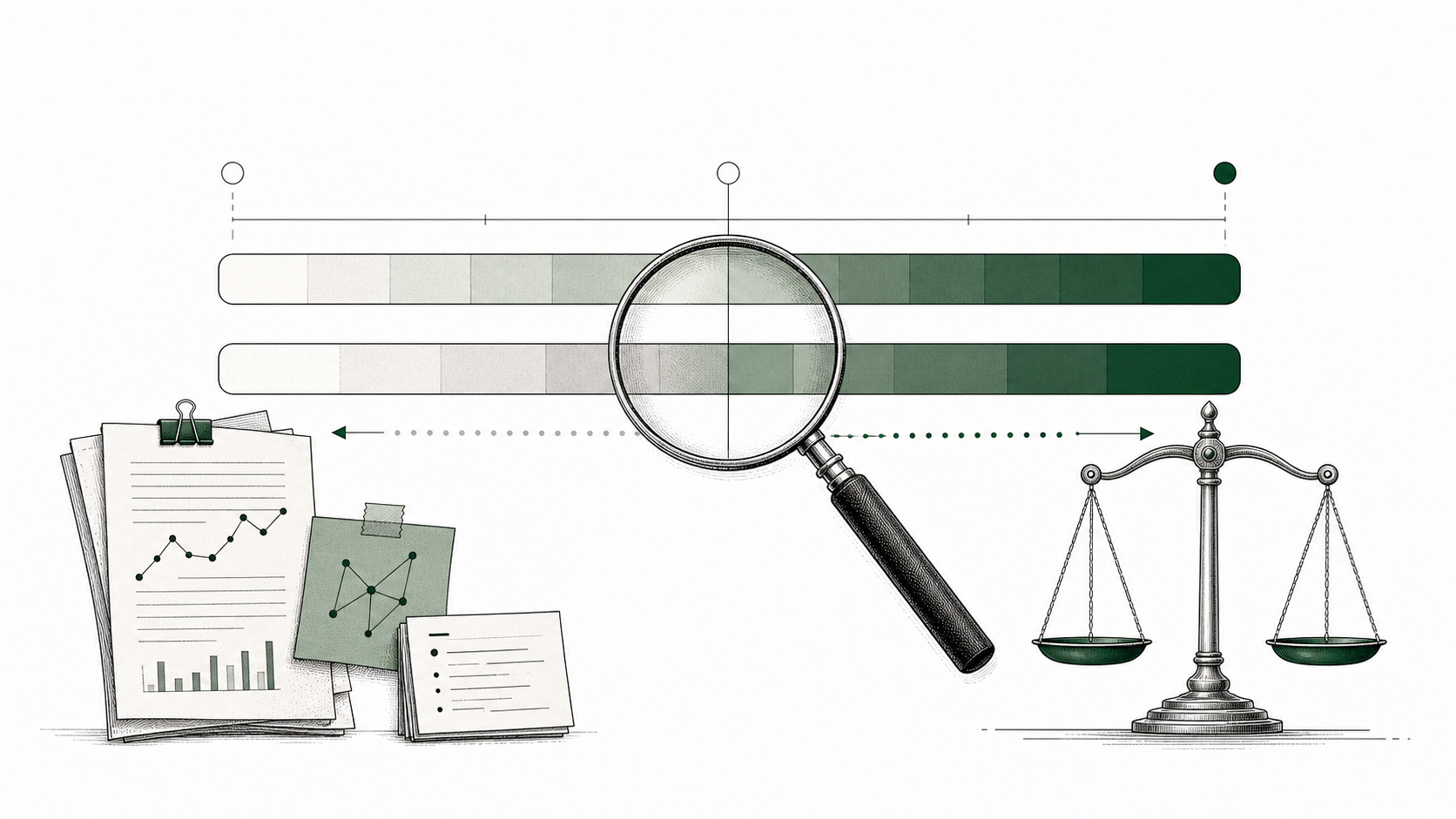
Critique Framework
How this page evaluates the episode
Confidence is lowered when the episode asserts more than it argues.
Christian claims and rival explanations are held to the same evidential standard.
A text, doctrine, or example is tested for scope, access, correction, and public warrant.
The critique asks what secular, pluralist, or rival theological explanations would predict.
Concern should become proportionate action where agency exists, not inflated cosmic responsibility.
Research Backbone
Claims are mapped to Free of Faith and local framework sources
For “Why Weren’t We Made Sinless in the First Place?,” the Free of Faith anchors are assigned to concrete pressure points: Soul-making theodicy is tested through evil and soul-making probability, Donor sperm ethics through reproductive ethics and affected parties, and Foreknowledge and future through foreknowledge and modal freedom.
| Critique area | Free of Faith anchors | Local framework / academic anchor | How it shapes this critique |
|---|---|---|---|
| Soul-making theodicy | Logical Tension in Human SufferingGod has a Plan#45 divine inscrutability | Soul-making theodicy: soul-making theodicy; warrant sought: probability of actual evil under rival hypotheses | Applies to “God may have created a world with the possibility of sin because a greater good or soul-making purpose” by asking for a probability argument that the actual kinds and scale of evil are needed or expected under soul-making better than under and resisting admitting speculation yet using possible greater goods as if they answer evidential probability rather than merely block contradiction. |
| Donor sperm ethics | #41 allegedly objective conduct norms#42 candidate GodsSource of Human Rights | Donor sperm ethics: donor-sperm ethical claims; warrant sought: child welfare, consent, embodiment, and marital-goods analysis | Applies to “A Christian couple’s use of donor sperm raises serious ethical questions, though traditions differ” by asking for a case-level ethical analysis of child welfare, consent, marital exclusivity, identity, commodification, and available alternatives and resisting resting the conclusion on Catholic/Protestant tradition contrast without identifying the concrete harm, rights violation, or proportional risk. |
| Nicene and Spirit claims | Is Doctrinal Clarity Difficult?Grounding Ways of KnowingWhen Inerrancy Becomes Moot | Nicene and Spirit claims: Nicene Spirit claim; warrant sought: independent textual, historical, and philosophical support | Applies to “Christians can come to recognize the Holy Spirit’s equality with Father and Son, and Nicene orthodoxy marks real” by asking for independent textual, historical, and philosophical support for the Spirit’s equality that does not rely on later insider recognition after conversion and resisting treating regenerate recognition or Nicene boundary-marking as evidence of truth rather than evidence of in-group formation. |
| Foreknowledge and future | Grounding Ways of KnowingParsimony and ChristianityIs Doctrinal Clarity Difficult? | Foreknowledge and future: foreknowledge-freedom claim; warrant sought: modal account of fixity, causation, and agency | Applies to “God’s knowledge of the future need not imply that he determines every event in the future” by asking for a clear modal model distinguishing foreknowledge, fixity, causation, and freedom, with costs named for open theism, Molinism, or simple foreknowledge and resisting saying knowledge is not causation while leaving untouched whether future truths are fixed and how agency remains genuinely open. |
Claim Mapping
Low-content announcements skipped; substantive themes retained
| Claim family | Reconstruction | Status | Main risk |
|---|---|---|---|
| 1. Soul-making theodicy | God may have created a world with the possibility of sin because a greater good or soul-making purpose was in view. | Needs support | Main risk: admitting speculation yet using possible greater goods as if they answer evidential probability rather than merely block contradiction. |
| 2. Donor sperm ethics | A Christian couple’s use of donor sperm raises serious ethical questions, though traditions differ. | Needs support | Main risk: resting the conclusion on Catholic/Protestant tradition contrast without identifying the concrete harm, rights violation, or proportional risk. |
| 3. Nicene and Spirit claims | Christians can come to recognize the Holy Spirit’s equality with Father and Son, and Nicene orthodoxy marks real Christianity. | Needs support | Main risk: treating regenerate recognition or Nicene boundary-marking as evidence of truth rather than evidence of in-group formation. |
| 4. Foreknowledge and future | God’s knowledge of the future need not imply that he determines every event in the future. | Needs support | Main risk: saying knowledge is not causation while leaving untouched whether future truths are fixed and how agency remains genuinely open. |
1. Soul-making theodicy
Speculation should stay visibly speculative
The answer to why humans were not made incapable of evil appeals to greater goods and soul-making. Greg explicitly calls part of this speculation, which is commendable; the remaining concern is whether the speculation still functions pastorally as if it solves the problem.
The restrained version of Soul-making theodicy should say only this: “God may have created a world with the possibility of sin because a greater good or soul-making purpose was in view” remains plausible only in proportion to a probability argument that the actual kinds and scale of evil are needed or expected under soul-making better than under rival hypotheses.
first placeQuestion frame
greater goodTheodicy premise
God may have created a world with the possibility of sin because a greater good or soul-making purpose was in view.
| Claim | Evidence in transcript | Critique / downgrade |
|---|---|---|
| God may have created a world with the possibility of sin because a greater good or soul-making purpose was in view. | The transcript names soul-making and admits loose ends. | The admission helps, but the answer remains a possibility defense rather than a demonstrated explanation. |
| A stronger case would supply a probability argument that the actual kinds and scale of evil are needed or expected under soul-making better than under rival hypotheses. | The transcript support is that it names soul-making and admits loose ends. | Confidence falls when the reasoning depends on admitting speculation yet using possible greater goods as if they answer evidential probability rather than merely block contradiction. |
Formalization
Use \(M_{\mathrm{soulmaking}}\) for soul-making theodicy, \(E_{\mathrm{soulmaking}}\) for the episode's stated support, and \(W_{\mathrm{soulmaking}}\) for the missing bridge.
Assessment
The formalization leaves Soul-making theodicy at limited confidence: the claim needs a probability argument that the actual kinds and scale of evil are needed or expected under soul-making better than under rival hypotheses before the transcript support can rationally carry high confidence.
Applies if inability to see a better world is treated as support for this one being justified.
Applies where a coherent theodicy feels stronger than its evidence warrants.
2. Donor sperm ethics
Reproductive ethics needs more than tradition contrast
The episode discusses donor sperm by comparing Catholic and Protestant concerns. That is a helpful taxonomy, but the ethical conclusion still requires arguments about parenthood, consent, identity, child welfare, embodiment, and marital goods.
Donor sperm ethics is strongest when framed as a conditional proposal rather than a settled result: the transcript can preserve “A Christian couple’s use of donor sperm raises serious ethical questions, though traditions differ” only if it adds a case-level ethical analysis of child welfare, consent, marital exclusivity, identity, commodification, and available alternatives.
donor spermEthics question
morally wrongethical frame
A Christian couple’s use of donor sperm raises serious ethical questions, though traditions differ.
| Claim | Evidence in transcript | Critique / downgrade |
|---|---|---|
| A Christian couple’s use of donor sperm raises serious ethical questions, though traditions differ. | The transcript contrasts Roman Catholic and other Christian reasoning. | The analysis needs a case-level normative architecture and empirical attention to affected parties. |
| The live test is whether a case-level ethical analysis of child welfare, consent, marital exclusivity, identity, commodification, and available alternatives can be supplied. | Current support is limited to the transcript's move: it contrasts Roman Catholic and other Christian reasoning. | The claim weakens when resting the conclusion on Catholic/Protestant tradition contrast without identifying the concrete harm, rights violation, or proportional risk carries the load. |
Formalization
Here \(D_{\mathrm{donorsperm}}\) names donor-sperm ethical claims; \(E_{\mathrm{donorsperm}}\) captures what the transcript gives; \(W_{\mathrm{donorsperm}}\) represents the warrant still needed.
Assessment
In this section, the entailment fails because the cited support does not itself supply a case-level ethical analysis of child welfare, consent, marital exclusivity, identity, commodification, and available alternatives.
Applies if options are reduced to Catholic prohibition or permissive Protestant instinct.
Applies where tradition-specific categories may substitute for public reasons.
3. Nicene and Spirit claims
Doctrinal recognition is not independent evidence
The answer suggests regenerate Christians often find the Trinity and scriptural authority falling into place. That may describe religious formation, but it is weak as evidence for the doctrine’s truth.
The defensible claim is narrower than the episode's tone: “Christians can come to recognize the Holy Spirit’s equality with Father and Son, and Nicene orthodoxy marks real Christianity” should be held provisionally until independent textual, historical, and philosophical support for the Spirit’s equality that does not rely on later insider recognition after conversion is made explicit.
Nicene CreedDoctrine anchor
Holy SpiritTrinity claim
Christians can come to recognize the Holy Spirit’s equality with Father and Son, and Nicene orthodoxy marks real Christianity.
| Claim | Evidence in transcript | Critique / downgrade |
|---|---|---|
| Christians can come to recognize the Holy Spirit’s equality with Father and Son, and Nicene orthodoxy marks real Christianity. | The transcript appeals to Acts, regeneration, and the way doctrines fall into place for believers. | Insider recognition is not a public test of doctrinal truth. |
| A stronger case would add independent textual, historical, and philosophical support for the Spirit’s equality that does not rely on later insider recognition after conversion. | The episode instead gives the transcript's move: it appeals to Acts, regeneration, and the way doctrines fall into place for believers. | The downgrade applies if treating regenerate recognition or Nicene boundary-marking as evidence of truth rather than evidence of in-group formation remains the main bridge. |
Formalization
The model separates the target claim \(N_{\mathrm{Nicene}}\), the supplied evidence \(E_{\mathrm{Nicene}}\), and the absent warrant \(W_{\mathrm{Nicene}}\).
Assessment
The warrant variable does the work: without independent textual, historical, and philosophical support for the Spirit’s equality that does not rely on later insider recognition after conversion, the evidence remains compatible with weaker or rival interpretations of Nicene and Spirit claims.
Applies if regeneration is used to explain why Christians accept the doctrine, and that acceptance is then treated as confirmation.
Applies where orthodox insiders are treated as the norm for recognizing truth.
4. Foreknowledge and future
Foreknowledge models need modal precision
The episode asks whether God knows the future because he has planned every detail. The answer resists making planning the only ground. That is a useful distinction, but the metaphysical options need precision.
So the critique caps the confidence instead of discarding the whole point. “God’s knowledge of the future need not imply that he determines every event in the future” needs a clear modal model distinguishing foreknowledge, fixity, causation, and freedom, with costs named for open theism, Molinism, or simple foreknowledge before it can carry more than limited insider weight.
knows the futureOmniscience claim
determine everyDeterminism worry
God’s knowledge of the future need not imply that he determines every event in the future.
| Claim | Evidence in transcript | Critique / downgrade |
|---|---|---|
| God’s knowledge of the future need not imply that he determines every event in the future. | The transcript states the philosophical issue and sketches a distinction. | The answer needs explicit modal machinery and engagement with rival models. |
| The missing warrant is a clear modal model distinguishing foreknowledge, fixity, causation, and freedom, with costs named for open theism, Molinism, or simple foreknowledge. | What the transcript actually supplies is that it states the philosophical issue and sketches a distinction. | Public confidence should drop where the answer keeps saying knowledge is not causation while leaving untouched whether future truths are fixed and how agency remains genuinely open. |
Formalization
Let the analysis track three parts: \(F_{\mathrm{future}}\) as foreknowledge-freedom claim, \(E_{\mathrm{future}}\) as transcript support, and \(W_{\mathrm{future}}\) as the unmet condition.
Assessment
So the formal result is a downgrade, not a refutation: Foreknowledge and future needs a clear modal model distinguishing foreknowledge, fixity, causation, and freedom, with costs named for open theism, Molinism, or simple foreknowledge before high confidence is rational.
Applies where know, plan, determine, and ground can shift meanings.
Applies where preserving both sovereignty and freedom can guide which model feels acceptable.
Overall Assessment
Speculation is useful only when it stays modest
The best repair for this episode is selective, not global: preserve the practical point about Soul-making theodicy, but do not let it settle Foreknowledge and future without the missing warrant.
The page therefore assigns limited confidence to Soul-making theodicy and Donor sperm ethics: those themes may be instructive, but stronger conclusions require the evidence tests named below.
The epistemic reality
The episode often gives possible answers, but possible answers should not be heard as settled explanations
The certainty problem here is concentrated in Soul-making theodicy and Donor sperm ethics: the episode leans on local plausibility while the public case needs probability of actual evil under rival hypotheses and child welfare, consent, embodiment, and marital-goods analysis.
Confidence should fall wherever admitting speculation yet using possible greater goods as if they answer evidential probability rather than merely block contradiction or resting the conclusion on Catholic/Protestant tradition contrast without identifying the concrete harm, rights violation, or proportional risk substitutes for the evidence those claims require.
- Soul-making theodicy: the missing warrant is probability of actual evil under rival hypotheses.
- Donor sperm ethics: the main downgrade risk is resting the conclusion on Catholic/Protestant tradition contrast without identifying the concrete harm, rights violation, or proportional risk.
- Foreknowledge and future: keep the conclusion modest until modal account of fixity, causation, and agency is supplied.
The challenge
The weakest moves in Why Weren’t We Made Sinless in the First Place? need public warrant, not louder confidence
The weakest points in this transcript cluster around Nicene and Spirit claims, Soul-making theodicy, and Donor sperm ethics. These are not decorative gaps; they are the places where the episode asks listeners to let proclamation, selected examples, biblical citation, or pastoral urgency do work that only public evidence and symmetrical rival comparison can do.
The challenge is blunt: either defend those claims under ordinary evidential discipline or reduce the rhetoric. Faith, identity, reassurance, and ethical urgency may explain why the claims matter to insiders, but they do not make the claims rationally credible at the level asserted. Where faith protects confidence from evidence, the argument has stopped earning its confidence.
- In Nicene and Spirit claims around "Nicene Creed", the Begging the question problem with high diagnostic fit must be answered: Applies if regeneration is used to explain why Christians accept the doctrine, and that acceptance is then treated as confirmation.
- In Soul-making theodicy around "first place", the Belief bias problem with moderate diagnostic fit must be answered: Applies where a coherent theodicy feels stronger than its evidence warrants.
- In Donor sperm ethics around "donor sperm", the Authority bias problem with moderate diagnostic fit must be answered: Applies where tradition-specific categories may substitute for public reasons.
Calibration Tests
Evidence that would change the assessment
The most important calibration points are the Soul-making theodicy section, where confidence needs a probability argument that the actual kinds and scale of evil are needed or expected under soul-making better than under rival hypotheses, and the Donor sperm ethics section, where confidence needs a case-level ethical analysis of child welfare, consent, marital exclusivity, identity, commodification, and available alternatives.
| Area | Would raise confidence | Would lower confidence |
|---|---|---|
| Soul-making theodicy | A probability argument that the actual kinds and scale of evil are needed or expected under soul-making better than under rival hypotheses. | Admitting speculation yet using possible greater goods as if they answer evidential probability rather than merely block contradiction. |
| Donor sperm ethics | A case-level ethical analysis of child welfare, consent, marital exclusivity, identity, commodification, and available alternatives. | Resting the conclusion on Catholic/Protestant tradition contrast without identifying the concrete harm, rights violation, or proportional risk. |
| Nicene and Spirit claims | Independent textual, historical, and philosophical support for the Spirit’s equality that does not rely on later insider recognition after conversion. | Treating regenerate recognition or Nicene boundary-marking as evidence of truth rather than evidence of in-group formation. |
| Foreknowledge and future | A clear modal model distinguishing foreknowledge, fixity, causation, and freedom, with costs named for open theism, Molinism, or simple foreknowledge. | Saying knowledge is not causation while leaving untouched whether future truths are fixed and how agency remains genuinely open. |
AI Assessment Prompt
Prompt for independent assessment
Paste this into an AI system. The prompt already includes a steelmanned condensation of the episode's claims, then asks for a systematic coherence audit grounded in evidence-proportionate belief.
Copy-ready prompt
PASTE THIS PROMPT INTO YOUR FAVORITE AI:

Analyze the following steelmanned condensed argument from the Stand to Reason episode "Why Weren’t We Made Sinless in the First Place?" for logical fallacies, cognitive biases, logical incoherencies, non sequiturs, evidential overreach, and structural weaknesses.

The Steelmanned Condensed Claims:
◉ God may have allowed the possibility of sin because a greater good or soul-making process required it.
◉ Using donor sperm raises ethical questions for Christian couples even if traditions differ about the basis.
◉ Nicene Trinitarian doctrine is a cornerstone of Christian orthodoxy.
◉ Regenerate Christians often find belief in the Trinity and scriptural authority falling into place.
◉ God’s knowledge of the future need not mean he determines every event.

Treat the claims above as a steelman reconstruction of the episode's argument. Do not weaken, caricature, or replace that reconstruction before critiquing it. Preserve the intended pastoral and formational force of the argument while assessing whether even this best version succeeds.

Provide a rigorous, exhaustive critique of the argument. Use the principle that rational belief is a degree of belief that should map to the degree of the relevant evidence. Use clear section headers and subheaders, with common indicators such as "SECTION 1:", "1.1", "Subsection:", "#", or "##" when helpful. Use a variety of structural symbols throughout the response: "✶" for major section takeaways, "◉" for primary analytical points, and "➘" for subordinate implications, evidence-flow notes, or follow-up tests. Do not use asterisks for bolding or italics.

Required output structure:
✶ Start each major section with a short ALL-CAPS header.
◉ Use primary bullets for main criticisms, repairs, or conclusions.
➘ Use subordinate bullets for evidential details, hidden assumptions, inferential moves, and examples.
✶ Include at least these main sections, formatted in ALL-CAPS: Steelman Being Evaluated, Claim-by-Claim Audit, Fallacies and Biases, Structural Weaknesses, Repaired Argument, Evidence Needed, and Confidence Downgrades.

For each major claim, assess:
◉ What the claim would mean if true.
◉ What evidence is actually supplied in the steelmanned condensed argument.
◉ What evidence is asserted but not presented.
◉ What rival explanations or rival worldviews must be compared.
◉ Whether the confidence expressed exceeds the evidence supplied.
◉ Which assumptions are doing hidden work.
◉ Whether the claim is primarily pastoral, psychological, ethical, historical, metaphysical, or evidential.

Ensure your analysis exhaustively addresses the following vulnerabilities in the original claims:
◉ Possibility Versus Probability: Separate possible theodicies from demonstrated explanations.
◉ Reproductive Ethics: Require case-level harms and goods.
◉ Doctrinal Recognition: Test whether insider recognition is circular.
◉ Foreknowledge Models: Distinguish knowledge, planning, grounding, and determinism.
◉ Authority Bias: Audit appeals to creed and tradition.
◉ Inductive Symmetry: Compare doctrinal confidence across traditions.
◉ Evidence-Proportionate Belief: Keep speculation marked as speculation.
◉ Normative-Claim Threshold: Ask what public ethical criteria are being used.

Conclude with:
◉ The strongest charitable version of the argument after repair.
◉ The minimum evidence and reasoning required for the repaired version to justify stronger confidence.
◉ A short list of claims that should be downgraded in confidence if rational belief must map to the degree of relevant evidence.