June 26, 2026
How to Detect Heresy: The Gospel of James Talarico with Ryan Crews
This critique tests orthodoxy boundary, scripture test, gender and abortion claims, comparative religion against public evidence and rival explanations.
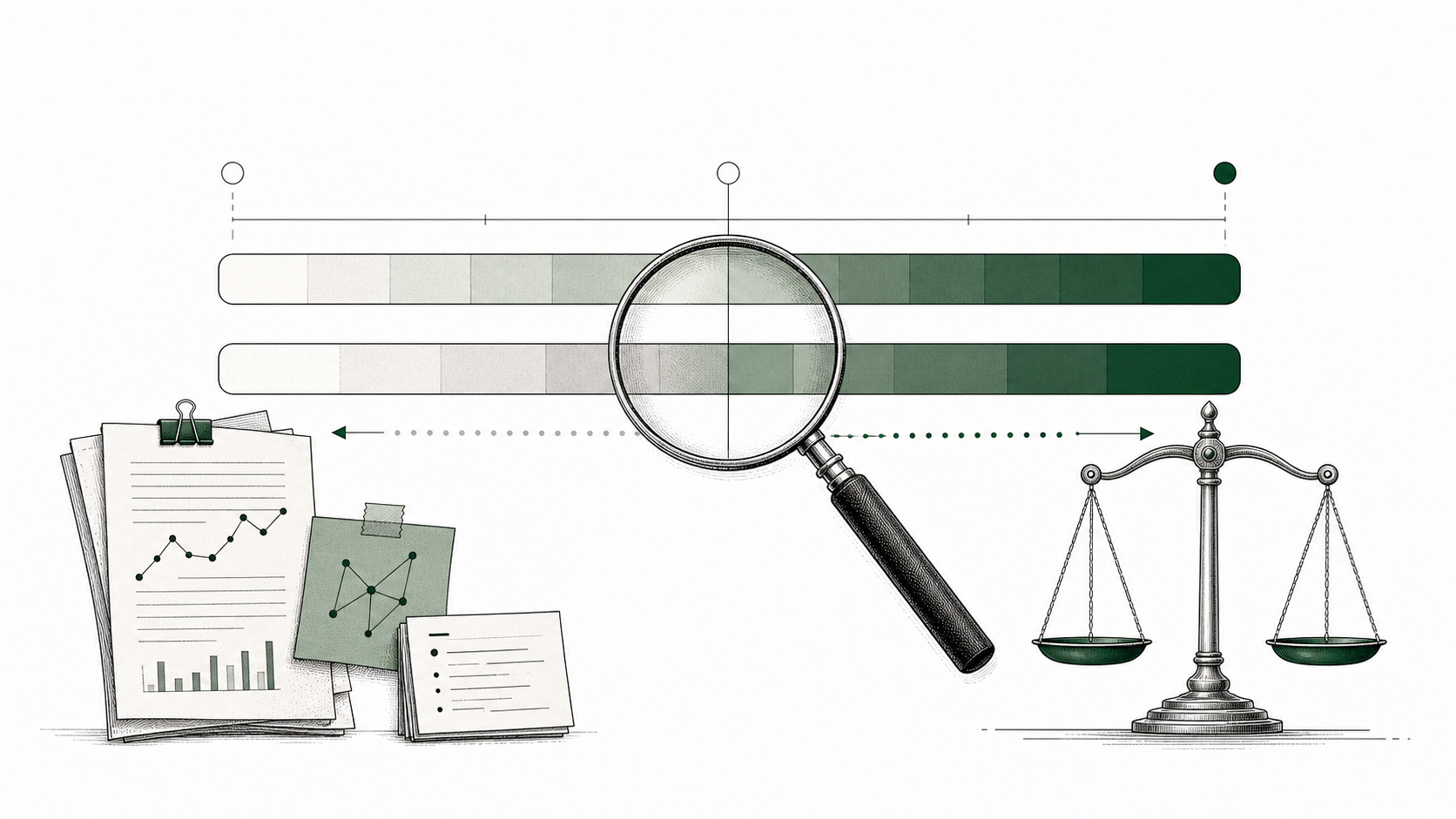
Critique Framework
How this page evaluates the episode
Belief should track evidential support rather than identity, comfort, or group pressure.
Inductive permission granted to Christianity must be granted to parallel claims unless a real differentiator is supplied.
A source of conduct rules is not yet a complete normative framework with access, binding force, scope, and repair.
Christian explanations must compete with secular, pluralist, psychological, and social explanations.
Concern should become proportionate action where agency exists, not inflated cosmic responsibility.
Research Backbone
Claims are mapped to Free of Faith and local framework sources
This page uses the same OnReason method applied to the Koukl pages: transcript claims are reconstructed charitably, then tested against Free of Faith anchors and local audit frameworks for calibration, symmetry, alternatives, and bounded agency.
| Critique area | Free of Faith anchors | Local framework / academic anchor | How it shapes this critique |
|---|---|---|---|
| Orthodoxy boundary | Biblical clarityInsider authority test | Case-Level Norms Audit for boundary judgments | The sources keep the orthodoxy boundary analysis from treating transcript emphasis as proof; they require comparison, public warrant, and a confidence level matched to the actual support. |
| Scripture test | Biblical clarityInsider authority test | Insider Authority Audit for doctrinal claims | The sources keep the scripture test analysis from treating transcript emphasis as proof; they require comparison, public warrant, and a confidence level matched to the actual support. |
| Gender and abortion claims | Changing ethical culturesNormative-Claim Threshold | Normative-Claim Threshold for doctrine-to-policy inferences | The sources keep the gender and abortion claims analysis from treating transcript emphasis as proof; they require comparison, public warrant, and a confidence level matched to the actual support. |
| Comparative religion | Collective convictionInductive Symmetry Audit | Inductive Symmetry Audit for comparative religion claims | The sources keep the comparative religion analysis from treating transcript emphasis as proof; they require comparison, public warrant, and a confidence level matched to the actual support. |
Claim Mapping
Low-content announcements skipped; substantive themes retained
| Claim family | Reconstruction | Status | Main risk |
|---|---|---|---|
| 1. Orthodoxy boundary | The transcript advances a orthodoxy boundary claim as part of the episode's wider apologetic case. | Needs warrant | The orthodoxy boundary inference may outrun the evidence if asserted without rival comparison. |
| 2. Scripture test | The transcript advances a scripture test claim as part of the episode's wider apologetic case. | Needs warrant | The scripture test inference may outrun the evidence if asserted without rival comparison. |
| 3. Gender and abortion claims | The transcript advances a gender and abortion claims claim as part of the episode's wider apologetic case. | Needs warrant | The gender and abortion claims inference may outrun the evidence if asserted without rival comparison. |
| 4. Comparative religion | The transcript advances a comparative religion claim as part of the episode's wider apologetic case. | Needs warrant | The comparative religion inference may outrun the evidence if asserted without rival comparison. |
1. Orthodoxy boundary
Boundary-setting needs explicit criteria
The strongest version of this orthodoxy boundary claim is that public statements about God, worship, Christianity, and Jesus reveal whether a teacher is inside Christian orthodoxy. In How to Detect Heresy: The Gospel of James Talarico, the point is framed as more than mood or memory; it becomes a reason to trust a wider Christian reading.
The weaker move appears when an invocation once and he called God the holy mystery and he ended the prayer by praying in your many names are treated as though they already answer the critique needs stable criteria that distinguish serious doctrinal disagreement from rhetorical labeling and political alarm. A calibrated critique can affirm the episode's concern while lowering confidence in the larger inference until that missing bridge is supplied.
an invocation once and he called God the holy mysteryTranscript phrase about holy mystery
he ended the prayer by praying in your many namesTranscript phrase about holy mystery
The quoted phrases anchor the claim that public statements about God, worship, Christianity, and Jesus reveal whether a teacher is inside Christian orthodoxy; they show the transcript's direction of travel, but they do not by themselves settle the critique needs stable criteria that distinguish serious doctrinal disagreement from rhetorical labeling and political alarm.
| Claim | Evidence in transcript | Critique / downgrade |
|---|---|---|
| The episode presents public statements about God, worship, Christianity, and Jesus reveal whether a teacher is inside Christian orthodoxy. | The transcript uses 'an invocation once and he called God the holy mystery' and 'he ended the prayer by praying in your many names' as compact anchors for this part of the argument. | Those anchors establish the asserted connection, but confidence should stay modest until the episode answers the critique needs stable criteria that distinguish serious doctrinal disagreement from rhetorical labeling and political alarm. |
| A stronger version would show why the orthodoxy boundary interpretation beats live alternatives. | The transcript supplies narrative, testimony, or expert framing around orthodoxy boundary, not a full rival-comparison test. | The downgrade for orthodoxy boundary is targeted: keep the local insight, but withhold the broader conclusion until the missing public warrant is made explicit. |
Formalization
Let P1 be the transcript support for orthodoxy boundary, and let C1 be the broader conclusion the episode wants listeners to draw.
Assessment
The formal point is narrow: evidence for a orthodoxy boundary observation can be relevant without entailing the stronger worldview claim. The missing step is the comparative warrant named in this section.
Begging the question applies to the orthodoxy boundary section because the transcript phrase 'an invocation once and he called God the holy mystery' is asked to support public statements about God, worship, Christianity, and Jesus reveal whether a teacher is inside Christian orthodoxy, while the missing comparison remains the critique needs stable criteria that distinguish serious doctrinal disagreement from rhetorical labeling and political alarm.
Confirmation bias applies to the orthodoxy boundary section because the transcript phrase 'an invocation once and he called God the holy mystery' is asked to support public statements about God, worship, Christianity, and Jesus reveal whether a teacher is inside Christian orthodoxy, while the missing comparison remains the critique needs stable criteria that distinguish serious doctrinal disagreement from rhetorical labeling and political alarm.
2. Scripture test
Appealing to the Bible is not the same as showing the interpretation
The strongest version of this scripture test claim is that false-teacher warnings require Christians to judge public figures by biblical teaching. In How to Detect Heresy: The Gospel of James Talarico, the point is framed as more than mood or memory; it becomes a reason to trust a wider Christian reading.
The weaker move appears when didn't just reference the Bible he also referenced the Torah and He also said you discovered that the Bible's silent on are treated as though they already answer insider Scripture can govern a church, but public critique still needs careful interpretation and proportional evidence. A calibrated critique can affirm the episode's concern while lowering confidence in the larger inference until that missing bridge is supplied.
didn't just reference the Bible he also referenced the TorahTranscript phrase about false teachers
He also said you discovered that the Bible's silent onTranscript phrase about false teachers
The quoted phrases anchor the claim that false-teacher warnings require Christians to judge public figures by biblical teaching; they show the transcript's direction of travel, but they do not by themselves settle insider Scripture can govern a church, but public critique still needs careful interpretation and proportional evidence.
| Claim | Evidence in transcript | Critique / downgrade |
|---|---|---|
| The episode presents false-teacher warnings require Christians to judge public figures by biblical teaching. | The transcript uses 'didn't just reference the Bible he also referenced the Torah' and 'He also said you discovered that the Bible's silent on' as compact anchors for this part of the argument. | Those anchors establish the asserted connection, but confidence should stay modest until the episode answers insider Scripture can govern a church, but public critique still needs careful interpretation and proportional evidence. |
| A stronger version would show why the scripture test interpretation beats live alternatives. | The transcript supplies narrative, testimony, or expert framing around scripture test, not a full rival-comparison test. | The downgrade for scripture test is targeted: keep the local insight, but withhold the broader conclusion until the missing public warrant is made explicit. |
Formalization
Let P2 be the transcript support for scripture test, and let C2 be the broader conclusion the episode wants listeners to draw.
Assessment
The formal point is narrow: evidence for a scripture test observation can be relevant without entailing the stronger worldview claim. The missing step is the comparative warrant named in this section.
Appeal to authority applies to the scripture test section because the transcript phrase 'didn't just reference the Bible he also referenced the Torah' is asked to support false-teacher warnings require Christians to judge public figures by biblical teaching, while the missing comparison remains insider Scripture can govern a church, but public critique still needs careful interpretation and proportional evidence.
Authority bias applies to the scripture test section because the transcript phrase 'didn't just reference the Bible he also referenced the Torah' is asked to support false-teacher warnings require Christians to judge public figures by biblical teaching, while the missing comparison remains insider Scripture can govern a church, but public critique still needs careful interpretation and proportional evidence.
3. Gender and abortion claims
Policy disagreement is doing doctrinal work
The strongest version of this gender and abortion claims claim is that positions on gender, abortion, prisons, and socialism expose a rival gospel beneath the candidate's Christian language. In How to Detect Heresy: The Gospel of James Talarico, the point is framed as more than mood or memory; it becomes a reason to trust a wider Christian reading.
The weaker move appears when he said there are six genders and God is non-binary and the trans population needs abortion and he said that if are treated as though they already answer moving from contested policy positions to heresy requires argument, not just proximity to culture-war flashpoints. A calibrated critique can affirm the episode's concern while lowering confidence in the larger inference until that missing bridge is supplied.
he said there are six genders and God is non-binaryTranscript phrase about six genders
the trans population needs abortion and he said that ifTranscript phrase about six genders
The quoted phrases anchor the claim that positions on gender, abortion, prisons, and socialism expose a rival gospel beneath the candidate's Christian language; they show the transcript's direction of travel, but they do not by themselves settle moving from contested policy positions to heresy requires argument, not just proximity to culture-war flashpoints.
| Claim | Evidence in transcript | Critique / downgrade |
|---|---|---|
| The episode presents positions on gender, abortion, prisons, and socialism expose a rival gospel beneath the candidate's Christian language. | The transcript uses 'he said there are six genders and God is non-binary' and 'the trans population needs abortion and he said that if' as compact anchors for this part of the argument. | Those anchors establish the asserted connection, but confidence should stay modest until the episode answers moving from contested policy positions to heresy requires argument, not just proximity to culture-war flashpoints. |
| A stronger version would show why the gender and abortion claims interpretation beats live alternatives. | The transcript supplies narrative, testimony, or expert framing around gender and abortion claims, not a full rival-comparison test. | The downgrade for gender and abortion claims is targeted: keep the local insight, but withhold the broader conclusion until the missing public warrant is made explicit. |
Formalization
Let P3 be the transcript support for gender and abortion claims, and let C3 be the broader conclusion the episode wants listeners to draw.
Assessment
The formal point is narrow: evidence for a gender and abortion claims observation can be relevant without entailing the stronger worldview claim. The missing step is the comparative warrant named in this section.
False dilemma applies to the gender and abortion claims section because the transcript phrase 'he said there are six genders and God is non-binary' is asked to support positions on gender, abortion, prisons, and socialism expose a rival gospel beneath the candidate's Christian language, while the missing comparison remains moving from contested policy positions to heresy requires argument, not just proximity to culture-war flashpoints.
Ingroup bias applies to the gender and abortion claims section because the transcript phrase 'he said there are six genders and God is non-binary' is asked to support positions on gender, abortion, prisons, and socialism expose a rival gospel beneath the candidate's Christian language, while the missing comparison remains moving from contested policy positions to heresy requires argument, not just proximity to culture-war flashpoints.
4. Comparative religion
Religious violence comparisons require symmetrical history
The strongest version of this comparative religion claim is that claims about Christianity and Islam reveal whether the speaker has abandoned Christian truth. In How to Detect Heresy: The Gospel of James Talarico, the point is framed as more than mood or memory; it becomes a reason to trust a wider Christian reading.
The weaker move appears when this that Christianity is more violent than Islam and has and this guy was a Bible-believing Christian who could be the are treated as though they already answer comparative religious violence cannot be settled by slogans; it needs definitions, periods, denominators, and counterfactual care. A calibrated critique can affirm the episode's concern while lowering confidence in the larger inference until that missing bridge is supplied.
this that Christianity is more violent than Islam and hasTranscript phrase about more violent than Islam
this guy was a Bible-believing Christian who could be theTranscript phrase about more violent than Islam
The quoted phrases anchor the claim that claims about Christianity and Islam reveal whether the speaker has abandoned Christian truth; they show the transcript's direction of travel, but they do not by themselves settle comparative religious violence cannot be settled by slogans; it needs definitions, periods, denominators, and counterfactual care.
| Claim | Evidence in transcript | Critique / downgrade |
|---|---|---|
| The episode presents claims about Christianity and Islam reveal whether the speaker has abandoned Christian truth. | The transcript uses 'this that Christianity is more violent than Islam and has' and 'this guy was a Bible-believing Christian who could be the' as compact anchors for this part of the argument. | Those anchors establish the asserted connection, but confidence should stay modest until the episode answers comparative religious violence cannot be settled by slogans; it needs definitions, periods, denominators, and counterfactual care. |
| A stronger version would show why the comparative religion interpretation beats live alternatives. | The transcript supplies narrative, testimony, or expert framing around comparative religion, not a full rival-comparison test. | The downgrade for comparative religion is targeted: keep the local insight, but withhold the broader conclusion until the missing public warrant is made explicit. |
Formalization
Let P4 be the transcript support for comparative religion, and let C4 be the broader conclusion the episode wants listeners to draw.
Assessment
The formal point is narrow: evidence for a comparative religion observation can be relevant without entailing the stronger worldview claim. The missing step is the comparative warrant named in this section.
Cherry picking applies to the comparative religion section because the transcript phrase 'this that Christianity is more violent than Islam and has' is asked to support claims about Christianity and Islam reveal whether the speaker has abandoned Christian truth, while the missing comparison remains comparative religious violence cannot be settled by slogans; it needs definitions, periods, denominators, and counterfactual care.
Selection bias applies to the comparative religion section because the transcript phrase 'this that Christianity is more violent than Islam and has' is asked to support claims about Christianity and Islam reveal whether the speaker has abandoned Christian truth, while the missing comparison remains comparative religious violence cannot be settled by slogans; it needs definitions, periods, denominators, and counterfactual care.
Overall Assessment
A narrower claim can survive
The episode is strongest when it is treated as a set of prompts about orthodoxy boundary, scripture test, gender and abortion claims, comparative religion, not as a completed demonstration. Several transcript moments are interesting and sometimes pastorally useful, but usefulness and rhetorical force are not the same as public warrant.
The scaled-down conclusion is that How to Detect Heresy: The Gospel of James Talarico gives listeners material worth examining. The stronger conclusion that Christian confidence should rise substantially requires the missing comparison tests named throughout the page.
The epistemic reality
Confidence should wait for the warrant
The transcript often moves quickly from illustration, testimony, historical memory, or expert assertion to a larger Christian conclusion. That speed is rhetorically effective, but it hides the evidential work still needed.
The responsible assessment is therefore not dismissal; it is a disciplined confidence downgrade. Claims may remain live, but they should not be treated as settled until alternatives and public warrants have been faced directly.
- The strongest local observations should be separated from the larger metaphysical conclusion they are asked to support.
- Rival secular, pluralist, psychological, historical, or theological explanations need the same evidential permission granted to the favored reading.
- Practical usefulness, civic motivation, or personal transformation can raise interest without independently proving the Christian interpretation.
The challenge
The weakest moves in How to Detect Heresy: The Gospel of James Talarico with Ryan Crews need public warrant, not louder confidence
The weakest points in this transcript cluster around Orthodoxy boundary, Comparative religion, and Scripture test. These are not decorative gaps; they are the places where the episode asks listeners to let proclamation, selected examples, biblical citation, or pastoral urgency do work that only public evidence and symmetrical rival comparison can do.
The challenge is blunt: either defend those claims under ordinary evidential discipline or reduce the rhetoric. Faith, identity, reassurance, and ethical urgency may explain why the claims matter to insiders, but they do not make the claims rationally credible at the level asserted. Where faith protects confidence from evidence, the argument has stopped earning its confidence.
- In Orthodoxy boundary around "an invocation once and he called God the holy mystery", the Begging the question problem with high diagnostic fit must be answered: Begging the question applies to the orthodoxy boundary section because the transcript phrase 'an invocation once and he called God the holy mystery' is asked to support public statements about God, worship, Christianity, and Jesus reveal whether a teacher is inside Christian orthodoxy, while the missing comparison remains the critique needs stable criteria that distinguish serious doctrinal disagreement from rhetorical labeling and political alarm.
- In Comparative religion around "this that Christianity is more violent than Islam and has", the Cherry picking problem with high diagnostic fit must be answered: Cherry picking applies to the comparative religion section because the transcript phrase 'this that Christianity is more violent than Islam and has' is asked to support claims about Christianity and Islam reveal whether the speaker has abandoned Christian truth, while the missing comparison remains comparative religious violence cannot be settled by slogans; it needs definitions, periods, denominators, and counterfactual care.
- In Scripture test around "didn't just reference the Bible he also referenced the Torah", the Appeal to authority problem with moderate diagnostic fit must be answered: Appeal to authority applies to the scripture test section because the transcript phrase 'didn't just reference the Bible he also referenced the Torah' is asked to support false-teacher warnings require Christians to judge public figures by biblical teaching, while the missing comparison remains insider Scripture can govern a church, but public critique still needs careful interpretation and proportional evidence.
Calibration Tests
Evidence that would change the assessment
The assessment of How to Detect Heresy: The Gospel of James Talarico can move, but only through tests tied to the four reconstructed claims below.
| Area | Would raise confidence | Would lower confidence |
|---|---|---|
| Orthodoxy boundary | Confidence in orthodoxy boundary would rise if the episode supplied independent evidence that its interpretation predicts the relevant facts better than named alternatives. | Confidence in orthodoxy boundary should fall if future versions keep relying on the same transcript emphasis without definitions, denominators, or rival cases. |
| Scripture test | Confidence in scripture test would rise if the episode supplied independent evidence that its interpretation predicts the relevant facts better than named alternatives. | Confidence in scripture test should fall if future versions keep relying on the same transcript emphasis without definitions, denominators, or rival cases. |
| Gender and abortion claims | Confidence in gender and abortion claims would rise if the episode supplied independent evidence that its interpretation predicts the relevant facts better than named alternatives. | Confidence in gender and abortion claims should fall if future versions keep relying on the same transcript emphasis without definitions, denominators, or rival cases. |
| Comparative religion | Confidence in comparative religion would rise if the episode supplied independent evidence that its interpretation predicts the relevant facts better than named alternatives. | Confidence in comparative religion should fall if future versions keep relying on the same transcript emphasis without definitions, denominators, or rival cases. |
AI Assessment Prompt
Prompt for independent assessment
Paste this into an AI system. The prompt already includes a steelmanned condensation of the episode's claims, then asks for a systematic coherence audit grounded in evidence-proportionate belief.
Copy-ready prompt
PASTE THIS PROMPT INTO YOUR FAVORITE AI:

Analyze the following steelmanned condensed argument from the podcast episode "How to Detect Heresy: The Gospel of James Talarico with Ryan Crews" for logical fallacies, cognitive biases, logical incoherencies, non sequiturs, evidential overreach, and structural weaknesses.

The Steelmanned Condensed Claims:
◉ The episode argues that orthodoxy boundary supports a wider Christian interpretation because The quoted phrases anchor the claim that public statements about God, worship, Christianity, and Jesus reveal whether a teacher is inside Christian orthodoxy; they show the transcript's direction of travel, but they do not by themselves settle the critique needs stable criteria that distinguish serious doctrinal disagreement from rhetorical labeling and political alarm.
◉ The episode argues that scripture test supports a wider Christian interpretation because The quoted phrases anchor the claim that false-teacher warnings require Christians to judge public figures by biblical teaching; they show the transcript's direction of travel, but they do not by themselves settle insider Scripture can govern a church, but public critique still needs careful interpretation and proportional evidence.
◉ The episode argues that gender and abortion claims supports a wider Christian interpretation because The quoted phrases anchor the claim that positions on gender, abortion, prisons, and socialism expose a rival gospel beneath the candidate's Christian language; they show the transcript's direction of travel, but they do not by themselves settle moving from contested policy positions to heresy requires argument, not just proximity to culture-war flashpoints.
◉ The episode argues that comparative religion supports a wider Christian interpretation because The quoted phrases anchor the claim that claims about Christianity and Islam reveal whether the speaker has abandoned Christian truth; they show the transcript's direction of travel, but they do not by themselves settle comparative religious violence cannot be settled by slogans; it needs definitions, periods, denominators, and counterfactual care.
◉ Taken together, the episode presents How to Detect Heresy: The Gospel of James Talarico as a case where historical, ethical, and theological claims mutually reinforce Christian confidence.

Treat the claims above as a steelman reconstruction of the episode's argument. Do not weaken, caricature, or replace that reconstruction before critiquing it. Preserve the intended pastoral and formational force of the argument while assessing whether even this best version succeeds.

Provide a rigorous, exhaustive critique of the argument. Use the principle that rational belief is a degree of belief that should map to the degree of the relevant evidence. Use clear section headers and subheaders, with common indicators such as "SECTION 1:", "1.1", "Subsection:", "#", or "##" when helpful. Use a variety of structural symbols throughout the response: "✶" for major section takeaways, "◉" for primary analytical points, and "➘" for subordinate implications, evidence-flow notes, or follow-up tests. Do not use asterisks for bolding or italics.

Required output structure:
✶ Start each major section with a short ALL-CAPS header.
◉ Use primary bullets for main criticisms, repairs, or conclusions.
➘ Use subordinate bullets for evidential details, hidden assumptions, inferential moves, and examples.
✶ Include at least these main sections, formatted in ALL-CAPS: Steelman Being Evaluated, Claim-by-Claim Audit, Fallacies and Biases, Structural Weaknesses, Repaired Argument, Evidence Needed, and Confidence Downgrades.

For each major claim, assess:
◉ What the claim would mean if true.
◉ What evidence is actually supplied in the steelmanned condensed argument.
◉ What evidence is asserted but not presented.
◉ What rival explanations or rival worldviews must be compared.
◉ Whether the confidence expressed exceeds the evidence supplied.
◉ Which assumptions are doing hidden work.
◉ Whether the claim is primarily pastoral, psychological, ethical, historical, metaphysical, or evidential.

Ensure your analysis exhaustively addresses the following vulnerabilities in the original claims:
◉ Worldview Totalization: Examine whether Christianity is asserted as a map of all reality rather than argued to be the uniquely accurate map of all reality.
◉ Private-to-Public Shift: Test whether moving from personal faith to public worldview smuggles in authority claims that still require public justification.
◉ Evidence-Proportionate Belief: Assess whether claims about resurrection, lordship, creation, Fall, redemption, and final restoration receive enough evidence to justify the confidence placed in them.
◉ Pastoral Usefulness Versus Truth: Evaluate whether the existential usefulness of hope, identity, and calling is being treated as evidence that the worldview is true.
◉ Narrative Closure: Analyze whether a promised ending functions as a circular story-ending premise that predetermines the interpretation of present events.
◉ Insider Authority: Examine whether appeals to Scripture and Christian tradition establish the claims only for insiders who already grant those sources authority.
◉ Resurrection Evidence Gap: Evaluate moves from mentioning evidence to treating resurrection as a central reality when the actual evidence is not presented.
◉ Lordship Claim Expansion: Assess whether lordship claims are argued as public facts or merely proclaimed as theological commitments.
◉ Equivocation Risk: Check for shifts in the meanings of worldview, hope, truth, Lord, good, fallen, redeemed, identity, and calling.
◉ Cultural-Moment Framing: Examine whether culture-war examples create a false dilemma, strawman, or asymmetric framing.
◉ Analogy Limits: Test whether literary or pastoral analogies legitimately support public conclusions.
◉ Historical Selectivity: Evaluate uses of church-history examples for cherry-picking, survivorship bias, halo effect, or hasty generalization.
◉ Normative-Claim Threshold: Ask whether theological categories generate determinate conduct guidance without additional contested premises.
◉ Inductive Symmetry: Compare the standards used to accept Christian explanatory claims with the standards required for rival worldviews.
◉ Scope Leakage: Identify moves from this helps Christian students live with hope and purpose to therefore Christianity is true or uniquely adequate.
◉ Burden of Proof and Special Pleading: Determine whether rival views are asked to justify themselves while Christian claims are exempted from comparable scrutiny.
◉ Non Sequitur Risk: Identify conclusions that do not follow from premises, especially from prosocial motivations to metaphysical truth or from scriptural narrative to public epistemic warrant.

Conclude with:
◉ The strongest charitable version of the argument after repair.
◉ The minimum evidence and reasoning required for the repaired version to justify stronger confidence.
◉ A short list of claims that should be downgraded in confidence if rational belief must map to the degree of relevant evidence.